
DMAIC analysis
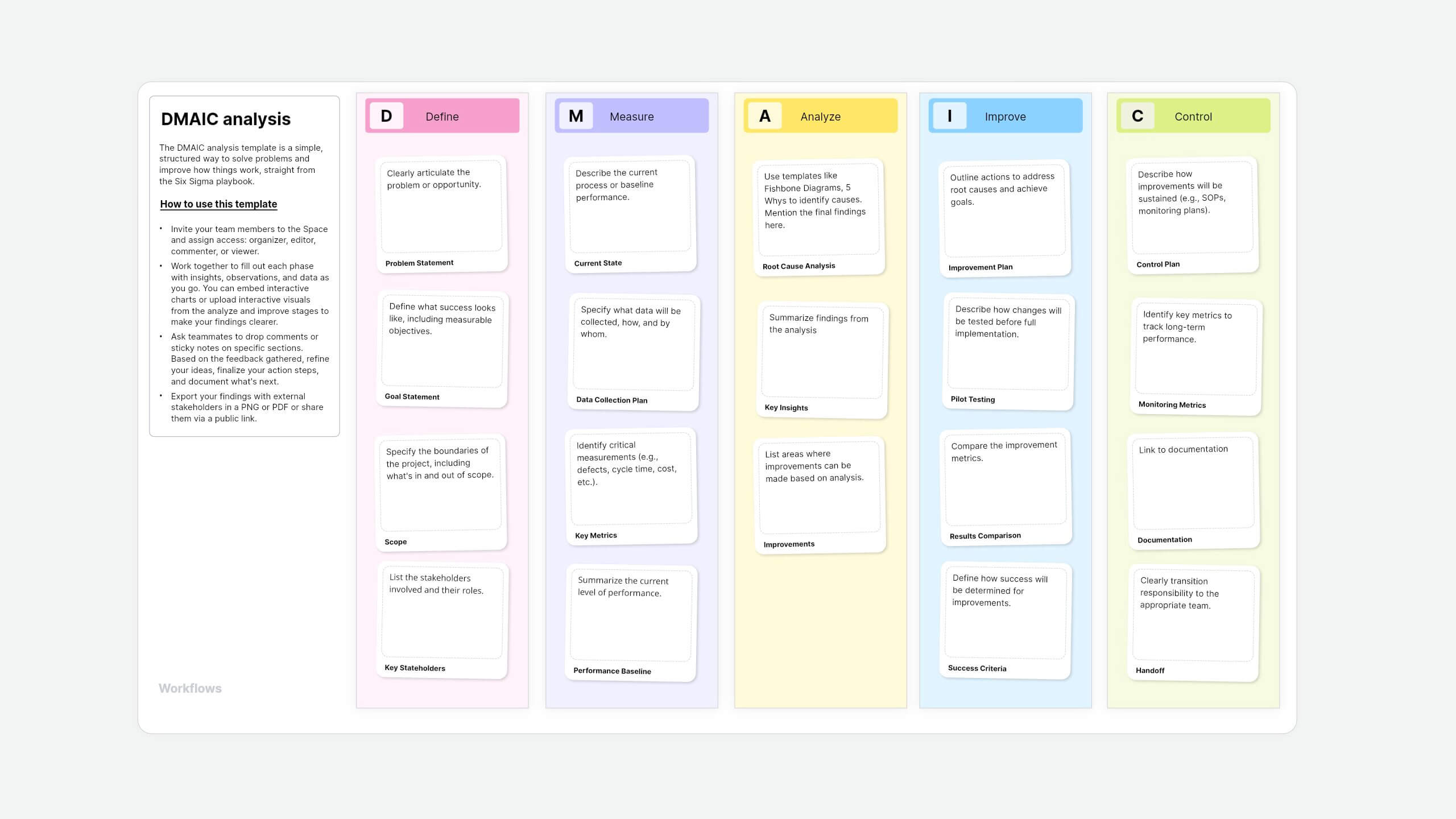
What is a DMAIC analysis template?
The DMAIC analysis template is a simple, structured way to solve problems and improve how things work, straight from the Six Sigma playbook. It helps your team break down and improve business or design processes using five clear steps in a data-driven cycle: define, measure, analyze, improve, and control.
To improve the efficiency of your process, follow the process steps in order.
- Define: Start by identifying the problem. What's not working? What needs to change?
- Measure: Gather baseline data to see how things are performing right now. Set key metrics so you can track the process as you go.
- Analyze: Dive into the data and uncover what's really causing the issue. Use root cause analysis and a fishbone diagram template to connect the dots.
- Improve: Based on the findings, develop smart solutions and test them out as a team.
- Control: Once it's working, put checks in place to make sure the improvements stick over time.
About Vani's DMAIC analysis template
The DMAIC analysis template in Vani gives you a ready-to-use layout with everything you need to improve a process clearly organized under each step: define, measure, analyze, improve, and control.
You and your team can jump right in to brainstorm, map out the problem, and work through solutions, all in one place on a single infinite canvas. There's no need to start from scratch—just focus on fixing what matters together.
How to use this template
- Add the template to your Vani SpaceStart by finding the DMAIC analysis template in the templates library and click Use template to add it to your Vani Space. Invite your team members to the Space and assign access: organizer, editor, commenter, or viewer.
- Fill out each sectionWork together to fill out each phase with insights, observations, and data as you go. You can embed interactive charts or upload interactive visuals from the analyze and improve stages to make your findings clearer.
- Review togetherAsk teammates to drop comments or sticky notes on specific sections. Based on the feedback gathered, refine your ideas, finalize your action steps, and document what's next.
- Share the findingsExport your findings with external stakeholders in a PNG or PDF or share them via a public link.
When to use the DMAIC analysis template
The structured and data-driven approach of this DMAIC analysis template is useful when you need to understand and improve a process, fix a recurring problem, or align your team around a clear action plan. It's especially helpful when collaboration and structure are key.
- Process improvement: When your process isn't performing as it should, the DMAIC analysis template helps you break it down, find what's slowing it down, and improve it step by step.
- Solving root causes: If you can see the symptoms of the problem but don't know the real causes, use the DMAIC analysis template to dig into the data and uncover the real issue.
- Six Sigma and Lean projects: If your organization follows Six Sigma, Lean, or Kaizen methodology, this template fits right in. It gives you a framework to approach improvement projects with clarity and consistency.
- Quality control: Use it to reduce errors, improve quality, and put systems in place that prevent the same problems from happening again.
Why use this DMAIC template in Vani?
- Drag-and-drop shapes: Use advanced shapes under each factor to analyze.
- Real-time collaboration: Whether your team works remotely or hybrid, they can see instant updates and co-edit the findings in real time.
- Layers: Zoom in, edit, and keep things organized and easy to follow in your DMAIC analysis.
- Version history: Keep track of every change and revert to the previous version when needed. Once you've finished, duplicate the final Space and reuse it for your next project.
- All-in-one canvas: Bring in data, diagrams, and embeds to the shared infinite canvas in Vani to create, meet, and work together.
FAQs
- Product managers: Use this template to resolve inefficiencies in projects.
- Customer success team: Improve satisfaction and the overall customer journey.
- HR teams: Refine recruitment, onboarding, and training processes.
- Operations managers: Identify bottlenecks and reduce unnecessary costs.
- Quality assurance teams: Spot defects and improve the quality of your product or service.