
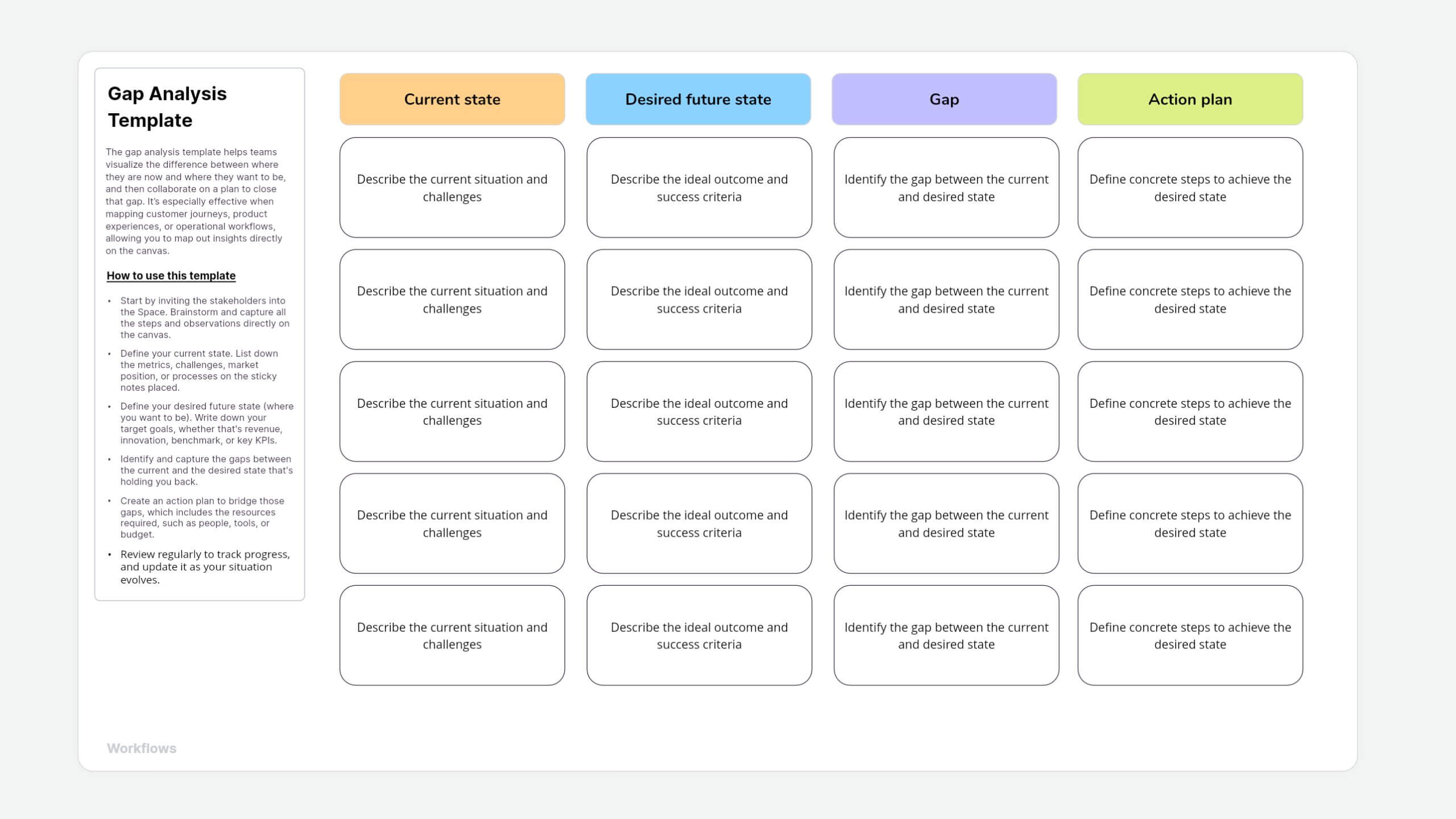
What is a gap analysis template?
A gap analysis template helps teams compare the current state (AS-IS) with the desired future state (TO-BE) to identify what is missing. It highlights gaps in performance, capabilities, processes, or outcomes and helps define the actions needed to close those gaps.
Visual gap analysis in Vani
Vani's gap analysis template provides a structured, visual workspace to clearly map current conditions, define target outcomes, and identify the gaps in between. Instead of vague assumptions, teams can document differences, analyze root causes, and align on the actions required to move forward.
How to use this template
- Step 1: Add the gap analysis template to your Vani SpaceOpen the template library in Vani and select the gap analysis template. Click the Use template button to add it to your Space.
- Step 2: Define the current state (AS-IS)Document how things work today. Capture existing processes, performance levels, tools, and outcomes.
- Step 3: Define the desired future state (TO-BE)Clearly describe what success looks like. This could include improved performance, new capabilities, or better outcomes.
- Step 4: Identify the gapsCompare the current state with the future state and highlight what's missing. These gaps could be related to skills, processes, technology, resources, or alignment.
- Step 5: Analyze root causesUnderstand why the gaps exist. Look beyond symptoms to identify underlying issues, such as inefficiencies, lack of clarity, or resource constraints.
- Step 6: Define actions to close the gapsList the specific actions required to bridge each gap. These actions should be clear, practical, and aligned with the desired outcome.
- Step 7: Prioritize and plan executionReview all identified gaps and prioritize them based on impact and effort. Focus on the most critical areas first.
When to use a gap analysis
Use a gap analysis when you need to understand the difference between your current situation and a desired outcome, then define what needs to change to get there.
- Strategy planning: Compare your current capabilities with business goals to identify what is missing and where to focus next.
- Process improvement: Review existing workflows to find inefficiencies, bottlenecks, or missing steps that are affecting performance.
- Performance evaluation: Compare actual results with expected targets to understand where performance is falling short and why.
- Digital transformation: Assess your current tools, processes, and capabilities before introducing new systems or technologies.
- Product or feature development: Compare existing product capabilities with customer needs, requirements, or planned functionality to identify what still needs to be built or improved.
Why use Vani's gap analysis template?
- Compare current and future states visually: Map the AS-IS and TO-BE states side by side in one Space so the differences are easier to understand.
- Collaborate on gaps in real time: Work with teammates to review current conditions, identify missing capabilities, and refine the analysis together.
- Keep discussions connected to each gap: Use comments and threads to add context, discuss causes, and record decisions directly alongside the relevant part of the analysis.
- Organize causes, gaps, and actions clearly: Group related information visually so teams can connect each gap with its root cause and the actions needed to address it.
- Prioritize what needs attention: Use the shared Space to compare gaps, discuss impact and effort, and align on which areas should be addressed first.
FAQs
A gap analysis compares the current state with a desired future state to identify what is missing and what needs to change.
Leaders, product teams, operations teams, consultants, and strategy teams can use it to identify areas for improvement and plan next steps.
You can analyze performance, process, skills, technology, resource, capability, or strategic gaps.
Yes. You can modify the sections to match your goals, workflows, priorities, or analysis needs.
Evaluate each gap based on factors such as impact, urgency, effort, and available resources, then focus on the most important areas first.
Yes. It can help teams understand what is missing between the current project state and the desired outcome, making it easier to define actions and priorities.